Malcolm Burrows is a philanthropic advisor and foundation executive with 35+ years of experience who is based in Toronto, Canada.
He is founder and Executive Director of Aqueduct Foundation, a public foundation dedicated to facilitating personal philanthropy. Aqueduct carries out its charitable purposes through donor advised and other chartable funds. Aqueduct Foundation is the 13th largest foundation in Canada by assets and has deployed more than $1 billion in grants and charitable programs since inception in 2006. Malcolm lives in Toronto, Canada.
He is Head, Philanthropic Advisory Services at Scotia Wealth Management and (until 2026) its 110-year-old private foundation services practice. After a start in the arts and journalism, Malcolm worked for three major Toronto charities from 1990 to 2004: University of Toronto, Princess Margaret Cancer Foundation, and SickKids Foundation.
Malcolm is an active educator, writer, coach, and volunteer in the Canadian charitable sector. He writes regularly to think out loud, share ideas and engage in constructive debate. He was CAGP’s Educational Course Director and primary instructor from 2000 to 2011. He was a regular columnist for the defunct publication Gift Planning in Canada from 1999 to 2006. Many articles on this website were originally published on Canada’s top estates blog, All About Estates.
Malcolm is a public policy wonk and active volunteer in the charitable sector. Through the Canadian Association of Gift Planners (CAGP), he has contributed to the development of new charitable tax incentives, including the elimination of capital gains on gifts of public securities and the 2016 “estate donation” rules. His proposal for gifts of private securities and taxable real estate published by C.D. Howe Institute was included in the 2015 Federal Budget. He was CAGP’s course director from 1999 to 2011. He is a founding co-chair of CAGP’s Working Group on Donor Advised Funds and a past-Chair of CAGP’s Government Relations Committee.
He loves governance and board work in the NFP sector. Currently, he is a director of The Muttart Foundation (Edmonton), the Waugh Family Foundation, the Art Gallery of Ontario Foundation and a member of the Indigenous and Canadian Curatorial Committee at the Art Gallery of Ontario. Previously, he served on the board of Canada Helps, CRA’s Charities Directorate Technical Issues Working Group, CAGP’s National Board and Toronto Chapter, was Co-Editor of The Philanthropist, and a board member of both the Canadian and Spanish sections of Doctors Without Borders/Médecins Sans Frontières (MSF). He was named a Friend of the CAGP in 2003.


Estate planning is not just a technical exercise. To be successful it requires ongoing client communication and support. This is especially true for charities. Research shows that estate plans destabilize as death approaches. Charities assume bequest intentions are firm, but 48% of estate donors change their minds (and wills) if there is no communication from the charity within two years of death. This represents failure at every level.
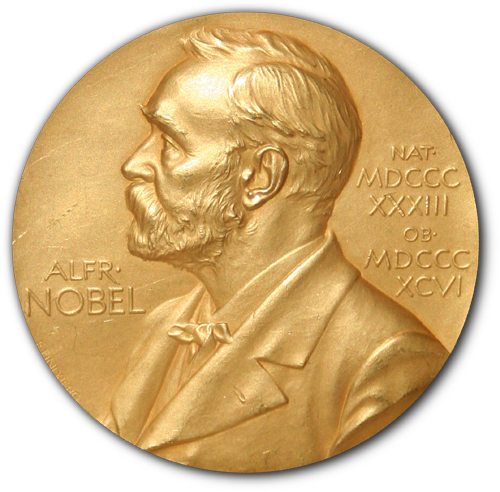
In the charitable world, restrictive trust terms may reduce public benefit over time because the needs of society and effective responses change. Would the Nobel Peace Prize have its international prominence and moral authority if it remained rooted in a 19th century world view of what a peacemaker looks like?
There is a saying among charitable gift planners: “beware of donors of in-kind property with valuations in hand.” In other words, some gifts may be too good to be true. This folk wisdom contains a serious point. Donors, executors and charities often struggle with the valuation of in-kind donation. Who commissions and pays for in-kind donation appraisals, the donor or charity? Does the valuation have integrity?

How can we protect the charitable intentions of donors from the risk of estate litigation?

A common misconception about donor advised funds is that they are trusts, charitable purpose trusts. Although donor advised funds have trust-like features, most are not trusts. March 2025

Canada has two basic types of registered charity: charitable organizations and foundations. These charity types are often paired to work together in a complementary fashion – ying and yang – to achieve shared purposes. This article is a short primer on the prevalence of this structure and how it can be used for charitable planning. January 2024

In 2022, new rules were introduced in the Income Tax Act that enable Canadian charities to make grants to non-qualified donees. To translate, these are organizations that are doing charitable work but are not registered charities in Canada. These rules are now clarified with a new CRA Guidance. Greater flexibility is coming, but donors need to proceed with caution. February 2023

From the 19th century to about 1990, the testamentary charitable trust was an important estate planning structure. These trusts are part of the will and are funded after death from estate assets. But they have been replaced by more modern and effective charitable planning structures. October 2023

Estate planning is an exercise in time travel. It is impossible to predict the future, especially when the time gap between planning and death is often decades. Fast forward 25 years, a charity may not exist when the estate is distributed.

Combining estate plans and lifetime financial plans can be challenging, especially for individuals who have dedicated a significant portion of their estate to charity, for example 50% or more. Wills are often drafted independently of lifetime financial plans. The drafting lawyer may not ask the question “is it prudent and advantageous to start giving major gift during life?”. In certain situations, there are significant tax and philanthropic benefits to start estate donations during life.

It is one year after the new estate donation rules were introduced and the practical implementations are beginning to emerge. With the post-2016 rules, a twist arises when the residue of the estate is split between charity and individual beneficiaries. This scenario creates a gift that keeps giving.

Is a donor obliged to provide ongoing support to a charity after a building or facility is named in their honour? The legal answer is “no”. Naming, however, may stir up complex feelings of ownership and hope, which often lead to misunderstandings — even after the donor is dead.

People value objects more when they own or possess them – or at least when they presume ownership. In cognitive psychology this phenomenon is called the “endowment effect”. It’s a concept that was seemingly invented to describe a lot of behaviour related to estates, philanthropy and foundations. It’s time to give it a name.

There is a fundraising truism that says you don’t get money unless you ask for it. But estate planning professional know that’s not always true.

Last week I received a call from a client who wished to include a “donate to eliminate” clause in his will. His goal is to wipe-out all taxes in his estate by giving just the right amount to his favorite charities…

I am fortunate to work with many animal lovers on their philanthropic estate plans. They are interested in a wide range of animals and issues. A recent article in The Walrus magazine about the animal sanctuary, registered charity and social media phenomenon Happily Ever Esther Farm Sanctuary highlights a number of key estate planning and charity issues.

The issue: how can a testamentary spousal trust or an alter ego trust be drafted to enable a residual gift to charity be eligible for a tax receipt?


An “ah ha” of COVID-19 is the importance of unrestricted giving to charity. Donors, foundations and charities are realizing that excess conditions may hinders responses to urgent social needs. Will this insight last beyond the pandemic? And does it apply to estate donations?

There is a saying among charitable gift planners: “beware of in-kind property donors who show up with valuations in hand.” In other words, eager donors and their gifts may be too good to be true. This is folk wisdom that points to a serious issue. Donors, executors and charities often struggle with in-kind donation valuation. Who commissions and pays for in-kind donation appraisals, the donor or charity?

Can you donate the residual interest of a principal residence to charity? Absolutely! The question, however, is not can it be done, but should it be done. In most cases, the answer is no – especially for the charity.

When I was a young charitable gift planner, my charity was offered a cluster of islands on Georgian Bay. Surrounding the 100-year-old family cottage were sheds, cabins and boat houses. The donors had a vision: it would be a children’s camp.

“Is perpetuity 21 years?”, asked a charity colleague. “Well, no, it’s forever. Or until the end of time, or as long as we collectively exist,” I answered. Despite my emphatic response, the question is a good one because it underscores the inherent meaninglessness of the phrase “in perpetuity” in relation to charitable donations, trusts and endowments.

“Name That Charity” sounds like a failed 1960s game show. Instead, it is an approach to estate planning that paradoxically may discourage charitable giving.

When I last wrote about wine and estates it was 2019. A distant epoch. The Canadian situation has changed dramatically since then. Not only have I been drinking more and better wine (I’m not alone), but the secondary wine market has changed. It’s more liquid, if you will. This is helpful to wine collectors and executors.

Recently I received an inquiry from a life insurance advisor about a client who wished to establish a policy and donate it to two charities. My colleague wanted to know if this was possible. In my experience it is possible, but not the best way to do it.

Tax relief for an estate donation cannot be claimed until the property is transferred to a charity. No tax receipt; no tax credits. If the distribution is after 60 months after death of the donor there is no tax receipt at all. But what if the estate has illiquid assets that can’t easily be monetized, but may, possibly, be transferred in-kind to a charity?

A direct designation gift of RRIF or life insurance proceeds is an estate donation, but lawyers and executors have little or no role to play. Normal procedural and disclosure rules don’t apply. How do charities ensure they receive their intended gift? How does the estate receive its tax receipt?
The title of this blog may provoke laughter, or perhaps, just head-shaking disbelief. But estate donations to various levels of government do happen. The trick is to ensure that the donor’s intentions are carried out.