



Private foundations are believed to be durable entities. Perpetuity is often assumed at the planning stage. Canada Revenue Agency (CRA) data shows, however, that 3,073 private foundations closed during the period 2000 to 2025.
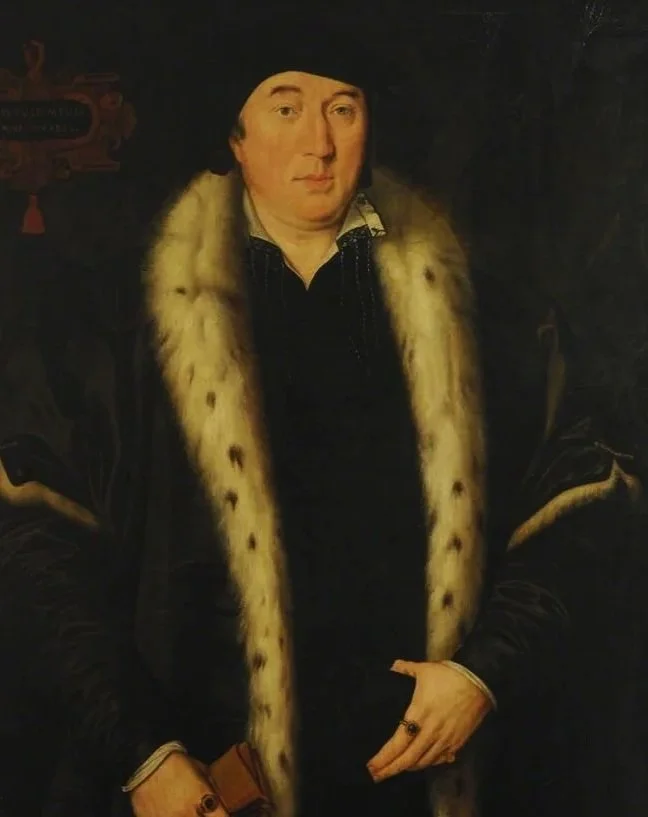
Every few hundred years charitable endowments come under attack. Donald Trump’s attacks have historical echoes, as these enormous pots of charitable money are always juicy targets in times of political upheaval. King Henry VIII of England dissolved the monasteries in the 1540s, which were effectively Catholic land endowments. I have a personal connection to this time – a distant relative, I’m told. Sir Thomas Pope was a major beneficiary and became a noted philanthropist.

Family Money Messages My friend Aneil Gokhale, Director of Philanthropy at the Toronto Foundation, has a talent for facilitating discussions about money. What messages do we inherit and how do they inform our inclination for, and approach to, giving? These messages are the software that influence future behaviour, including openness to giving to charity, during life and at death.

We are living in an age of personal philanthropy defined by larger donations and more donor choice. Increased flexibility is the key feature of this age – especially through charitable structures like private foundations and donor advised funds. Historically, charitable donations and structures been defined by restrictions and controls. Here is what changed and some implications for estate planning.
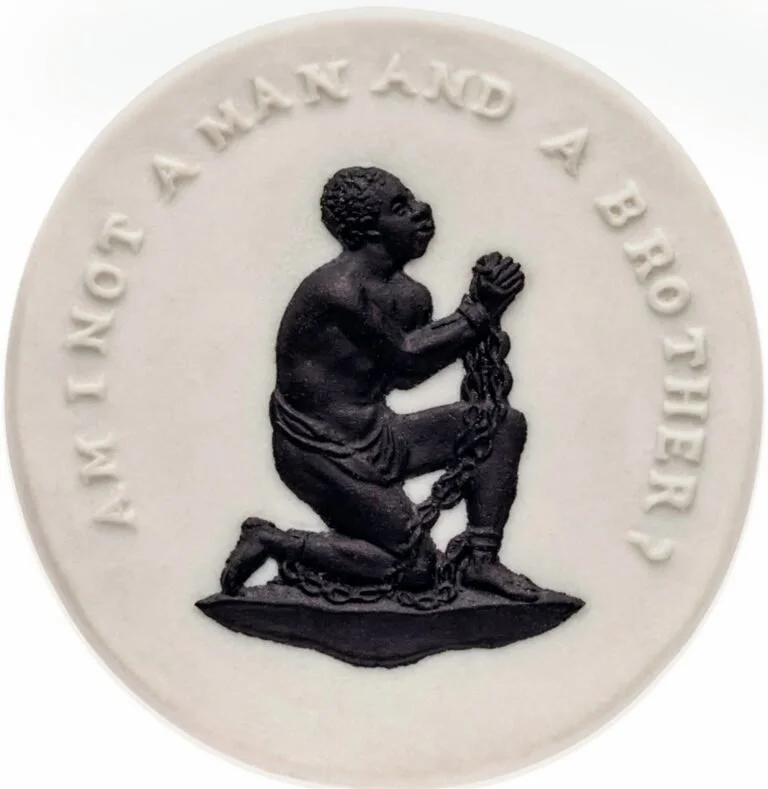
In 1787, Josiah Wedgwood, the British ceramics manufacturer, created an anti-slavery medallion in its classical, low-relief house style. This medallion is the OG protest button, and it was circulated free to abolitionist societies to be pinned to clothing of reformers. It starts a trend that has influenced the world of protest, politics and charity ever since.

The story of the Confraternità del Pio Monte Della Misericordia and Caravaggio’s painting The Seven Acts of Mercy is a fascinating example of how art and charity can intertwine to convey a powerful mission. December 2024

Portugal Cove South is a fishing village with approximately 86 residents on the Avalon Peninsula in Newfoundland that lost its church, but parishers fought back. It’s a story that has implications for churches, estate planning, and the charitable community across Canada. November 2024

One of the best products in a fundraiser’s toolkit is “donor recognition”, in particular naming a piece of real estate. However, donor recognition sometimes produces a backlash from the public. Public space is branded by private citizens and money. How do we balance these views to achieve positive social outcomes? October 2024

Philanthropy has a perpetuity obsession. For some foundations, perpetuity a sacred ideal, an aspiration that is sometimes unquestioned. Recently, foundations that “spend-down” are valorized as rare entities that value community impact over capital. But the reality is more complex. There is a long history of foundations that aren’t perpetual, and in Canada they are now, arguably, in the majority. July 2024

Child sponsorship is one of the greatest mass-market fundraising innovations of all time and a multi-billion dollar a year industry. It’s an effective model that has evolved over time, and it’s not without controversy. How did it emerge? Why is it so enduring? And, really, what’s happening behind the scenes? June 2024

Rueben Wells Leonard was an early Canadian tycoon straight out of central casting. He was a pioneering philanthropist whose views created controversy in life and after death. His story is a key part of Canadian philanthropic history, and it contains some relevant lessons for today. April 2024

This is a story about my mother, Carol Burrows, who dedicated her life to volunteer and community action. It’s also about how money has purpose and that purpose can be transferred from one generation to next. December 2023.

Student awards are one of the most popular charitable purposes, especially in estates. Donors often strongly identify with the life changing benefit of direct educational funding to students. Named scholarship funds are often named and constitute part of the donor’s legacy. November 2023

Charitable endowments are having a challenging moment. Endowments, which focus on long-term public benefit, have a built-in tension between capital and annual spending. Does the capital exist to provide steady future good, or could it be used better now? June 2023

SickKids Foundation’s year-end giving campaign has generated a lot of attention for its gripping “Vs” spots. Skillfully edited, the ad borrows fight, hip-hop and adventure movie imagery to dramatize the plight of the hospital’s young patients. This campaign is highly effective and a great example of visceral, urgent annual fundraising. Raw emotion has a place in charitable giving, but it doesn’t serve large “exceptional” donations at tax year-end and in estates.

Last week I received two inquiries from caring colleagues hoping to help individuals in need. One person had cancer and had lost his business, while the other was a sick child who perhaps could benefit from her own charitable foundation. As heart-rending as these stories are, neither qualify as “charity”. Both are forms of benevolence.

As a fundraiser at a university in the early 1990s I discovered that a primary extra incentive for major charitable gifts is matching funds. Typically from government sources, matching funds are compelling to donors and important fundraising tools for a lucky few charities. Unfortunately they create an uneven playing field in the charitable sector.

Impact is one of those philanthropic buzzwords that’s hard to define, but perhaps easy to know when you see it. The Gooderham donation for Connaught has all the elements.

In 11 weeks between March 25 and June 3, 2019 three $100 million dollar charitable donations were announced in Ontario. On February 13th, McGill University in Montreal announced a $200 million donation. These are enormous sums, and this unprecedented donation cluster is just the beginning of bigger things to come.
It’s useful to understand a bit of context.

In 1348 the plague hit Florence – and Europe – hard. Half the population died in this densely populated city of 80,000. One result of this mass die-off was 350,000 florins of bequests to one organization, Orsanmichele, a grain market with a miracle producing Madonna shrine…

Canada’s 85,896 registered charities have wide-ranging capacity, but these variations are often underappreciated. Estate donors – and their professional advisors – often focus on cause and tax status, but ignore organizational health indicators like history, funding, staffing, and governance. What should estate donors look for in a charity?

One in ten. That, according to charitable sector studies, is how many estate donors inform the charities in their will of their intentions. While this ratio varies by charity it underscores a fascinating paradox. Bequest donors trust charities enough to make them beneficiaries of their estate, but they don’t trust them enough to tell them in advance.

Some of the most nefarious villains in popular culture are philanthropists. The fabulous – and fabulously junky – Netflix series Lupin makes it clear. Philanthropists are smiling hypocrites with too much money and no scruples. Evil.

One the biggest trends in philanthropy of the last thirty-years is the rise of donor-directed or restricted giving. Donors want more control, which typically results in more restrictions being placed on gifts. But there are risks of placing restrictions on a charitable gift by will.

Organized religion has been the bedrock of the Canadian charitable sector. When charities were first required to register federally in 1967, over 60% of organizations were religious and most were churches. As of January 2022, Christian charities represent just 29.7% of Canada’s 86,080 registered charities. The implications for society, giving, and estate planning are significant.

When Lindbergh flew from New York to Paris in 1927, it was inspired by the $25,000 Orteig Prize. Also in the 1920s, when the International Math Union wanted to honour under 40-year-old rising mathematicians, Toronto math superstar J.C. Fields (under)funded a medal that has been awarded ever since.

I recently spoke to an estate lawyer who told me she would never recommend certain charities to clients. Why? Because of the way these charities treated estate trustees. Some charities are unduly litigious, grind on fees, and are obstreperous about releases.

The calls for greater transparency by charities in Canada is growing. Budget 2022 had a few promises of more reporting requirements for registered charities related to donor advised funds and disbursement quota, although the exact measures are still unclear. What does this mean for the charitable tradition of anonymous giving?

The Seven Faces of Philanthropy: A New Approach to Cultivating Major Donors is an iconic American fundraising book published in 1994. In it authors Russ Allen Prince and Karen Maru File neatly categorize charitable profiles. While written for a fundraising audience, the book is a helpful reminder that charitable motivations are diverse. There is not a single way that donors approach philanthropy.
Generally educational institutions, particularly at the post-secondary level, do an excellent job of administering awards. In my work, however, I have found a growing number of donors who want to help students who are in a specific community and/or share challenges or characteristics. The goal of these donors is to help the student, regardless of where they intend to study. In other words, the loyalty of the donor is to the future students, not a college or university.